From the production line to the consumer, one unbroken record
Once a product leaves the factory, its information usually stops there. Product Flow gives every unit a trusted identity before it leaves: one code per unit, carried from the line all the way to the consumer's hands.
One code per unit·GS1 Digital Link·Print, pack, ship, consumer scan

Give every product a trusted identity before it leaves the factory
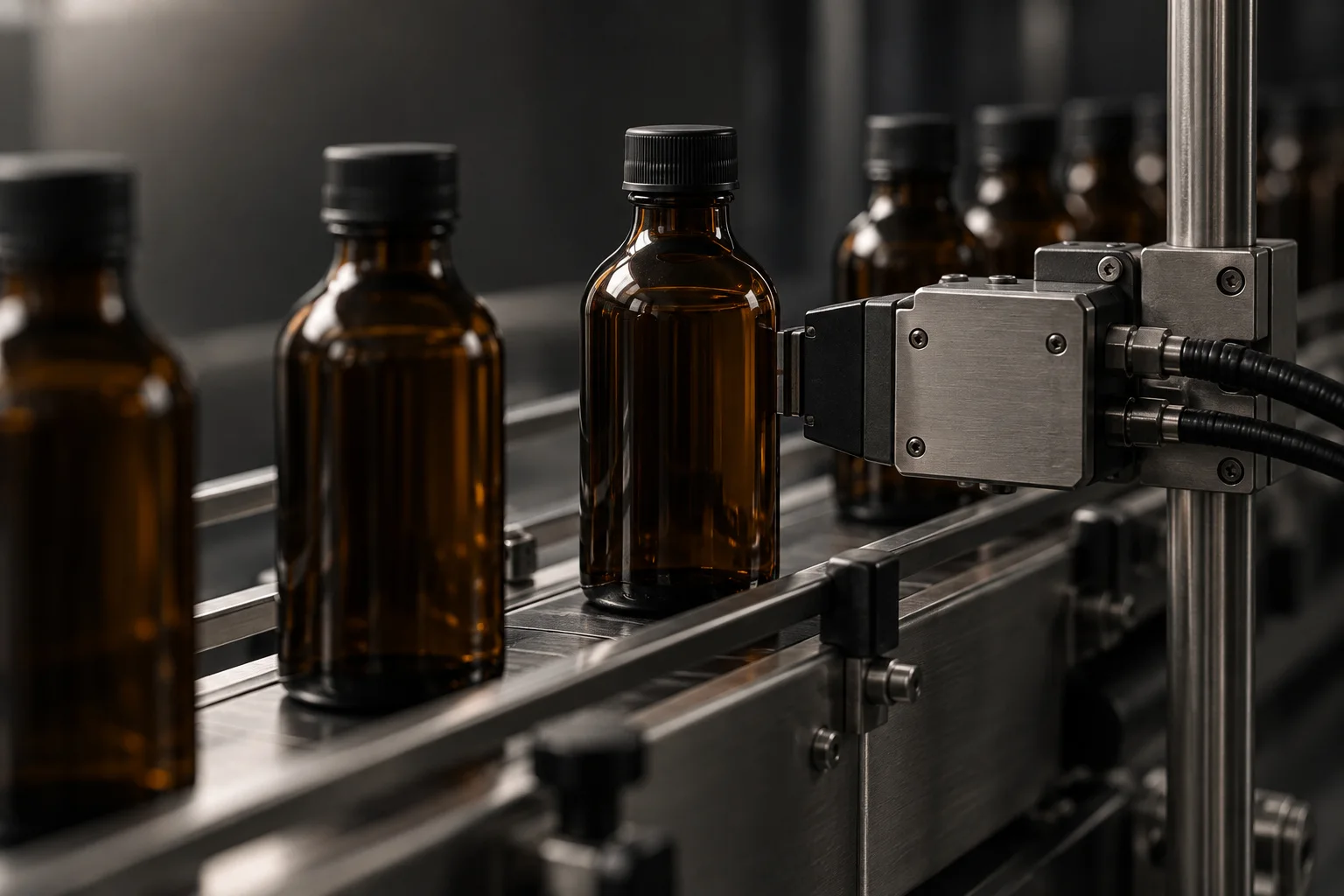
Domino coders work as one with the system, so the line prints a unique code straight onto every unit. A unit only counts once the camera has read it, and at packing the case code records exactly which units went inside.
- Goods flow
- Products move along the packaging line, station by station.
- Data flow
- Every station exchanges data with Product Flow: the system issues serials, the machines report results.
- NG reject
- A unit the camera cannot read is rejected on the spot and never reaches a case.
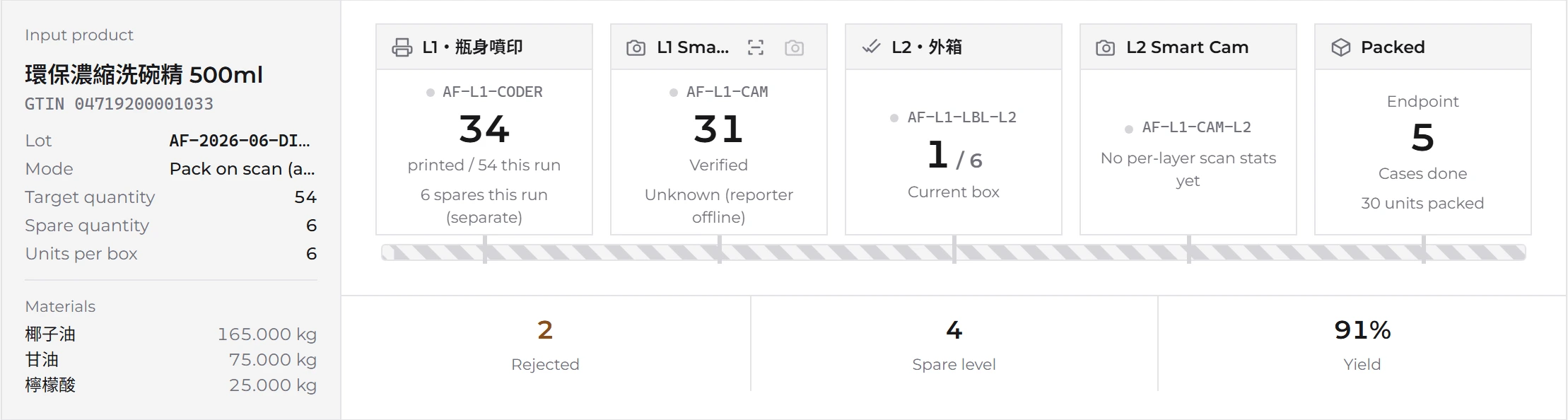
- Materials & packingReceiving and production records go back to the system
- L1 coderThe system issues serials; Domino prints one on every unit
- Smart CamReports each code it reads; a unit only counts once read
- RejectorRemoves any unit the camera could not read
- L2 labellerThe system issues the case code
- Smart CamReports the case code and which units are inside
- Seal & shipOne outer code links the whole shipment
- LogisticsTracking goes back to the system until the goods reach the market
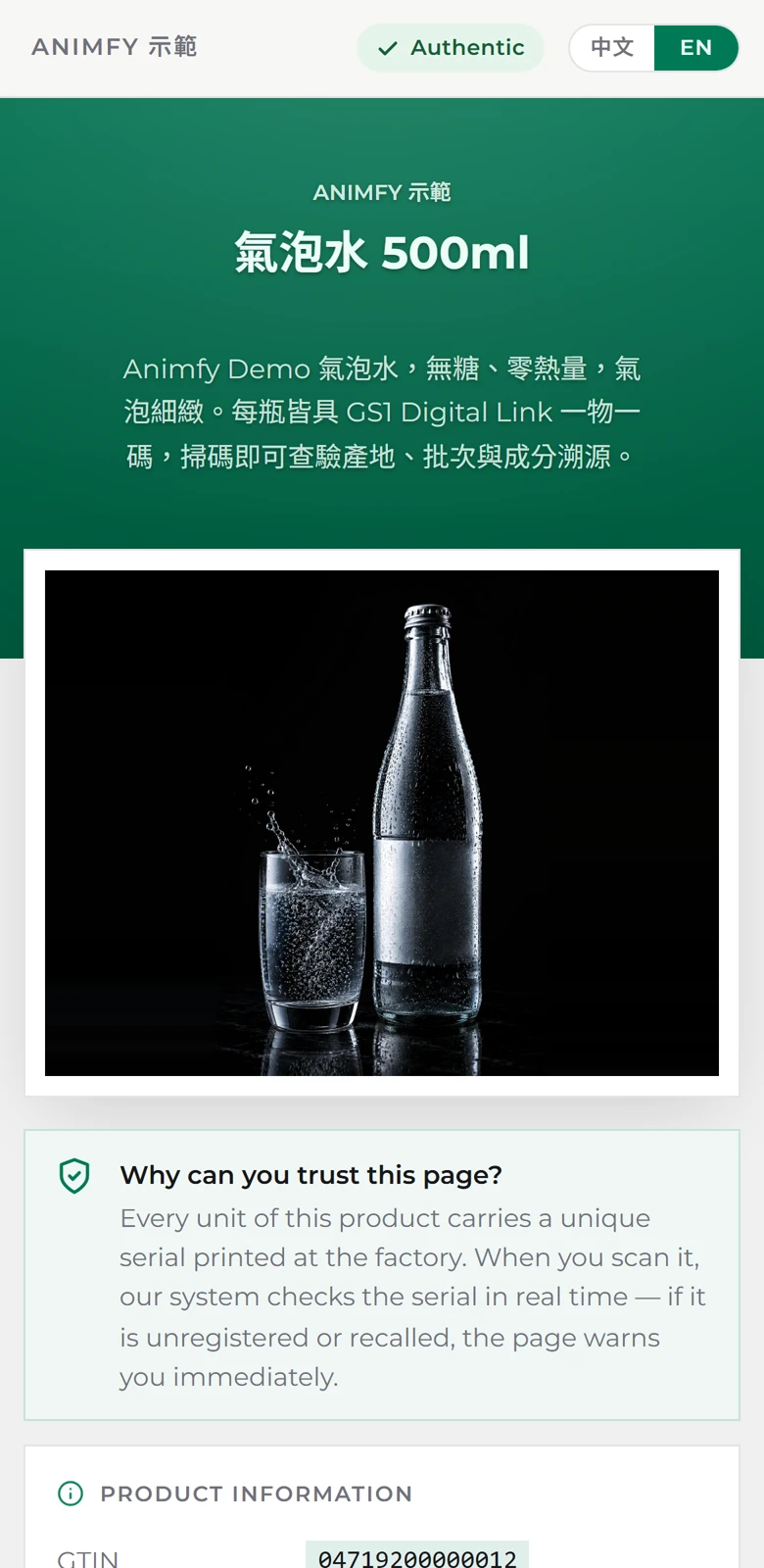
Scan one code, see everything about the product
No app to install. A scan opens the brand's own page: provenance, shelf life and food-safety information. The same code shows consumers the brand page, while POS and ERP systems read structured data.

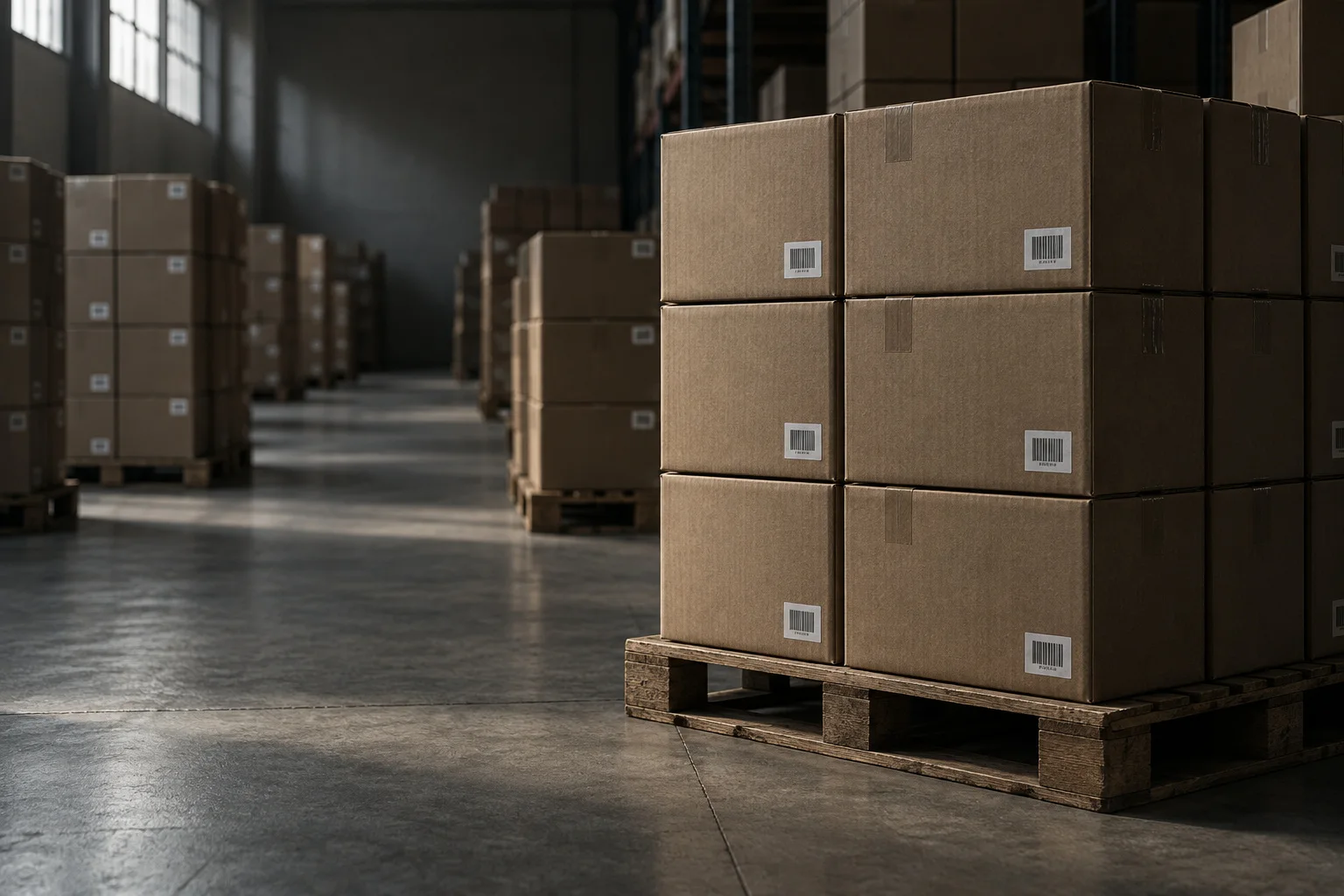
After the goods ship, you can still see them
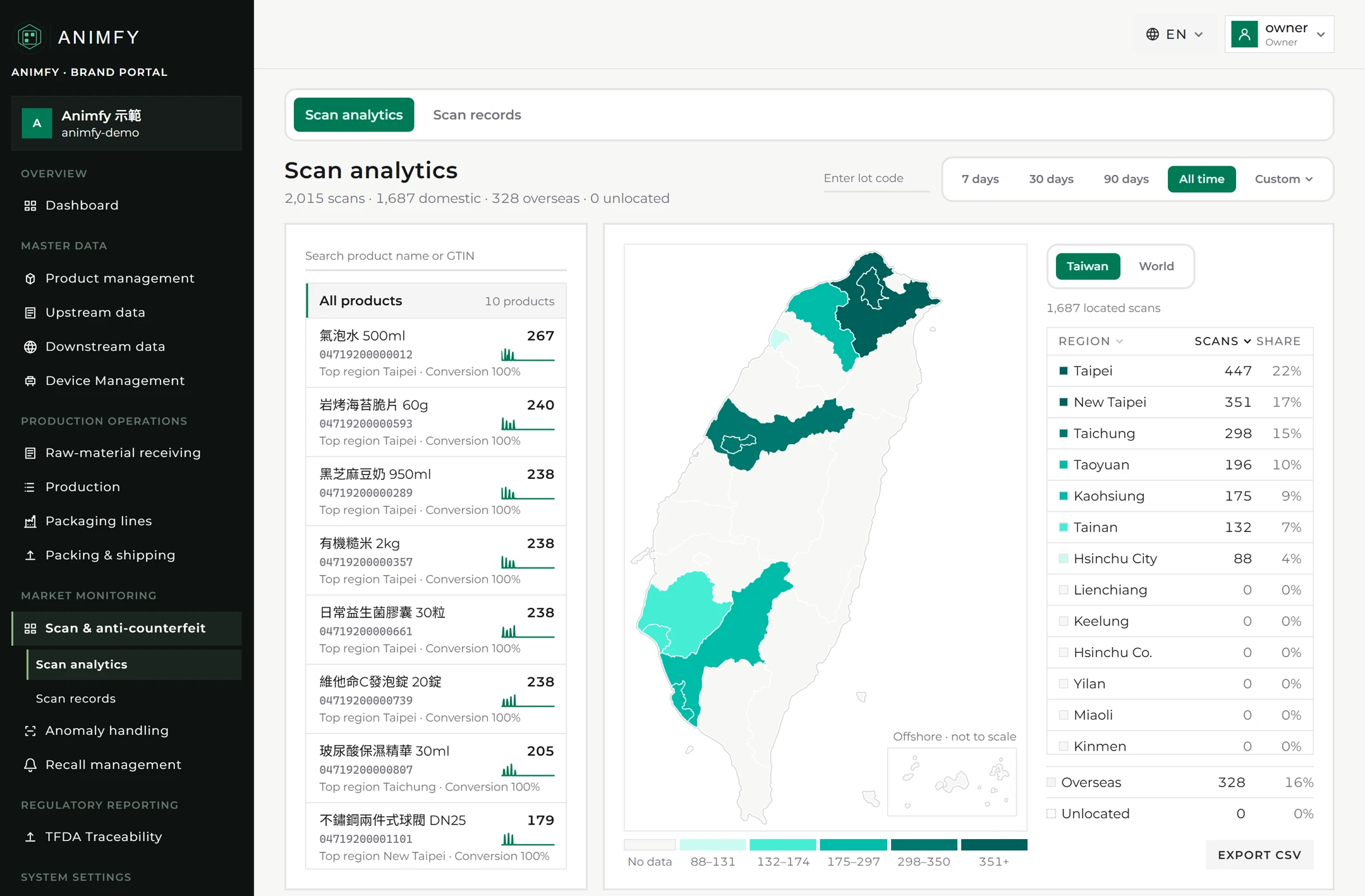
Every scan leaves a record of its time, region and serial, which you can cross-check by product and batch. When one serial is scanned in different cities, when a serial does not exist, or when the location does not match the shipping channel, the system flags it automatically.
One food-safety incident, two outcomes
The difference is whether you know the scope. When you can see which batch, which cases and which customers, that is the only part you have to deal with.
| Item | Conventional recall | Product Flow |
|---|---|---|
| Recall scope | Hard to define, so the whole batch comes off the shelf | Pinpoints the affected serials |
| Response time | Depends on paper records and cross-department checks | Open a case the moment an anomaly is found |
| Downstream list | Traced one by one, and easy to miss someone | The system works out the affected customers downstream |
| Consumers | Rely on news announcements and cannot tell if theirs is affected | A scan tells them; the page shows the warning |
| Recovery rate | Estimated by hand, hard to track | Calculated in real time, with electronic filing supported |
Once a case is open, the system produces the statutory recall documents, counts scan confirmations and manual reports separately, and keeps the full record automatically.